The returns industry has made enormous progress in the last decade. Platforms now exist that can initiate a return in seconds, route a parcel through multi-carrier networks across borders, and trigger a refund before the product even reaches the warehouse.
That first mile back — from customer to consolidation point — has been engineered, optimised, and polished. And rightly so. Speed of refund matters. Carrier optionality matters. Customer experience during the return process absolutely matters.
But here's what almost nobody is talking about: what happens after the parcel arrives?
Because that's where the real money is. And that's where most of it gets lost.
The Invisible Half of the Returns Chain
The typical returns conversation — at conferences, in vendor pitches, in LinkedIn thought pieces — focuses almost entirely on the consumer-facing journey. How fast can we get the label to the customer? How many drop-off points can we offer? How quickly can we issue the refund?
These are valid questions. But they only address half the chain.
Once a returned product lands back at a warehouse, a completely different operational reality begins. That product needs to be:
Received and identified — matched to the original order, verified against the return reason
Graded — assessed for cosmetic condition, functionality, completeness, and resale potential
Routed — directed to the right recovery channel based on its grade, category, and market value
Processed — repaired, refurbished, repackaged, dismantled for parts, or prepared for recycling
Resold or recycled — moved into a controlled secondary market or responsibly disposed of
This isn't a single step. It's an entire operational discipline. And if nobody owns it with rigour, two things happen that should keep every brand director awake at night.
Problem One: Value Destruction
The numbers are stark. In categories like furniture, home appliances, and bulky goods, 80–90% of returned products end up in landfill or destruction — not because they're broken, but because nobody has the infrastructure, expertise, or commercial network to recover them.
A returned sofa with a scuffed leg isn't waste. A returned washing machine that was "too large" isn't scrap. A returned dining table with a scratched surface isn't beyond recovery.
But without an operational partner who can grade intelligently, repair efficiently, and route to the right buyer at the right price — these products get written off. The brand takes the loss. The product goes to landfill. The embedded carbon, materials, and manufacturing value are destroyed.
The industry talks about sustainability in returns. But sustainability doesn't live in the label generation software. It lives on the warehouse floor, in the grading decision, in the repair bay, in the controlled resale channel.
Problem Two: Brand Damage Through Uncontrolled Resale
This is the one that rarely gets discussed — and it should be.
When returned inventory isn't managed through disciplined, controlled channels, it doesn't just disappear. It leaks. It shows up on marketplace listings at 40% of RRP. It gets bulk-sold to liquidators who dump it on discount platforms with no brand standards, no warranty, and no quality control.
That returned product — the one the brand already took a loss on — is now actively competing with the brand's own full-price inventory. It's cannibalising margins. It's confusing customers. And in many cases, it's being sold in a condition that damages the brand's reputation.
This isn't a theoretical risk. It's happening every day, at scale, across Europe.
A proper recovery operation prevents this by controlling every exit point. Grade A products can be resold through the brand's own channels — outlet stores, refurbished listings, authorised partners. Grade B products with minor cosmetic issues go through verified B2B networks with clear documentation. Grade C products are dismantled for parts, components, and recyclable materials. Nothing leaks into the wild.
Channel control isn't a nice-to-have. It's brand protection.
What a Real Recovery Operation Looks Like
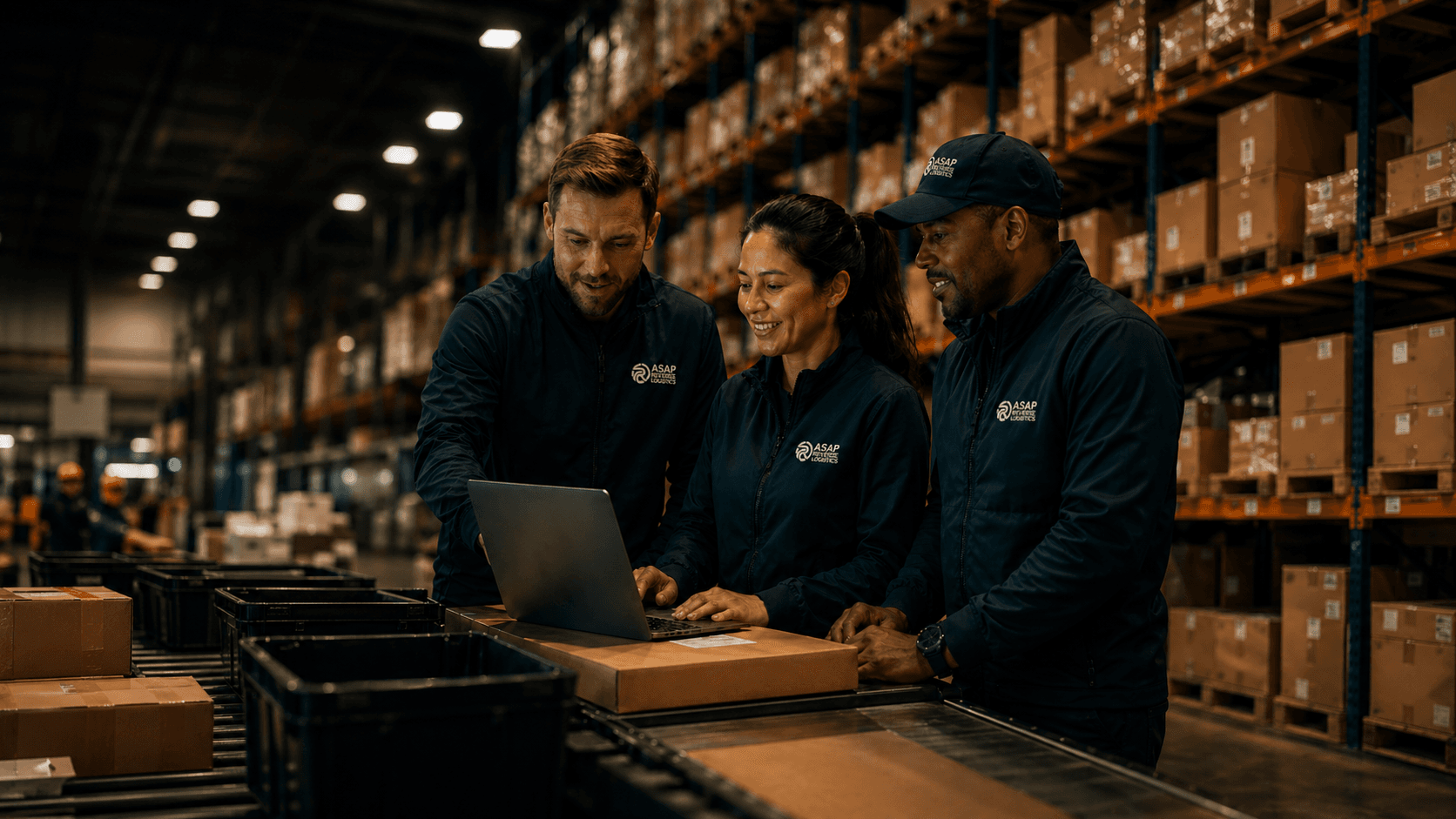
At ASAP Reverse Logistics, we've processed millions of returned products across every category — from consumer electronics to furniture, from home appliances to fashion accessories. Here's what we've learned about what separates value recovery from value destruction:
Intelligent Triage, Not Deep Refurbishment
The instinct is to repair everything. The economics say otherwise.
The goal is throughput with precision: Grade A products move to resale immediately, as-is. Grade B products receive targeted cosmetic intervention — 30 minutes maximum. Grade C and D products are dismantled for component recovery and responsible recycling.
This isn't about running a repair workshop. It's about making fast, accurate grading decisions that maximise the total recovery value across the entire lot — and doing it at speed. Our benchmark: 21 days from receipt to cash.
Multi-Channel Recovery
A single product doesn't have a single market. A returned coffee machine might be worth €85 as a refurbished unit sold to a verified B2B buyer, €45 as a parts donor, or €0.30/kg as recyclable material.
The recovery partner's job is to know which channel extracts the highest value for each grade — and to have the commercial network to execute on it. We operate across 27 EU markets with 65,000+ verified B2B buyers. That network is the infrastructure. Without it, grading decisions don't translate into revenue.
Documented, Compliant, Transparent
Every item graded. Every channel documented. Every buyer verified. Every transaction traceable.
This matters for the brand's compliance obligations — particularly as Extended Producer Responsibility (EPR) regulations expand across the EU. It matters for sustainability reporting. And it matters for the brand's peace of mind that their returned inventory isn't showing up in places it shouldn't.
The Recovery Gap Is a Strategic Opportunity
The returns industry has spent a decade perfecting the first mile back. The next decade belongs to whoever masters the last mile of recovery.
For brands, this means asking a harder question than "how fast can we issue a refund?" It means asking: what happens to the product after that — and who is accountable for the outcome?
The brands that answer this question seriously will recover margin where their competitors see only cost. They'll protect their pricing integrity. They'll meet tightening sustainability regulations with real data, not estimates. And they'll turn a cost centre into a recoverable asset line.
The ones that don't will keep writing off inventory, leaking product into uncontrolled channels, and wondering why their brand shows up on discount platforms at prices they never authorised.
Returns don't end at the warehouse door. That's where they begin.
ASAP Reverse Logistics specialises in multi-channel recovery for returned and excess inventory across the EU. From grading to resale, repair to recycling — we restore the value others have given up on, so that nothing is wasted.
To explore what a recovery partnership could look like for your business, get in touch.